MIL-STD-810H, before you build.
Benchmark runs your design through heat, cold, vibration and shock at MIL-STD-810H levels and shows which part runs out of margin first.
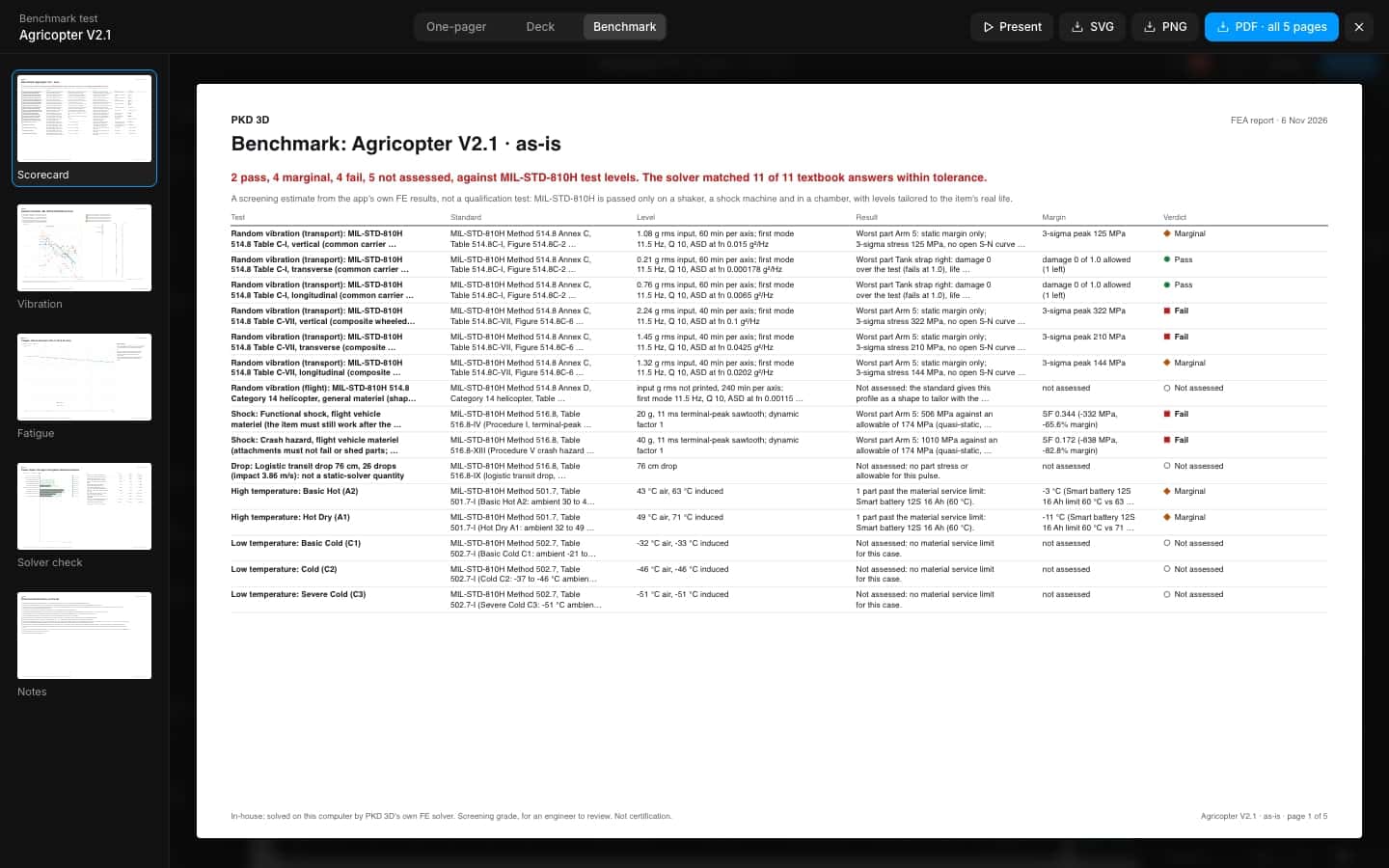
One click, every environment
The test levels come from the standard's own tables, cited on every case.
Choose the levels
Pick the climatic categories and the vibration and shock profiles your programme calls for. Each case cites the method and table it comes from.
- Method 501.7 high temperature
- Method 502.7 low temperature
- Method 514.8 vibration, 516.8 shock
Run it on your machine
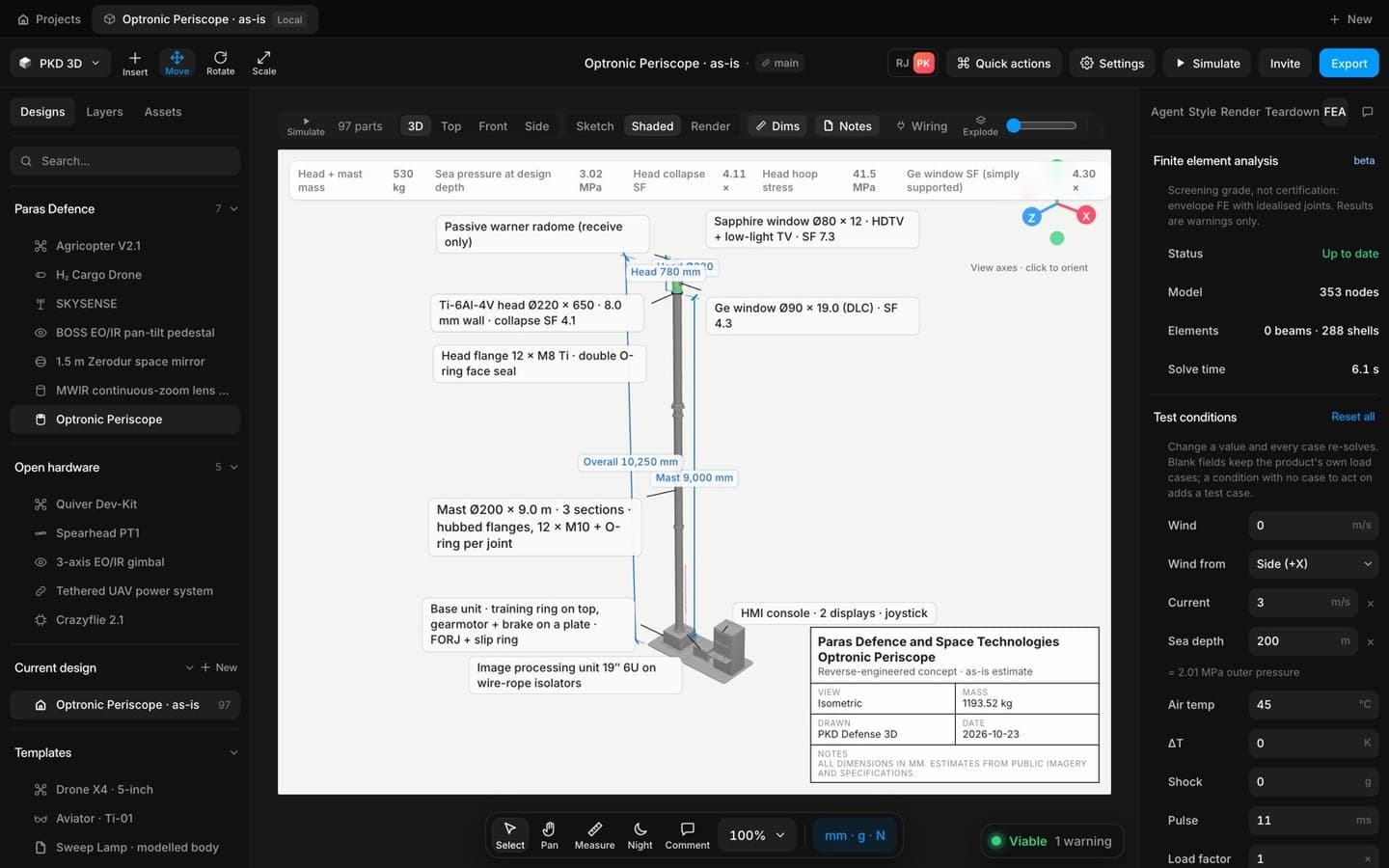
Every case solves on the real parts in your browser, one after another, while you keep working.
- Real geometry, not envelopes
- Progress shown case by case
- Results kept with the design version
See the weakest part
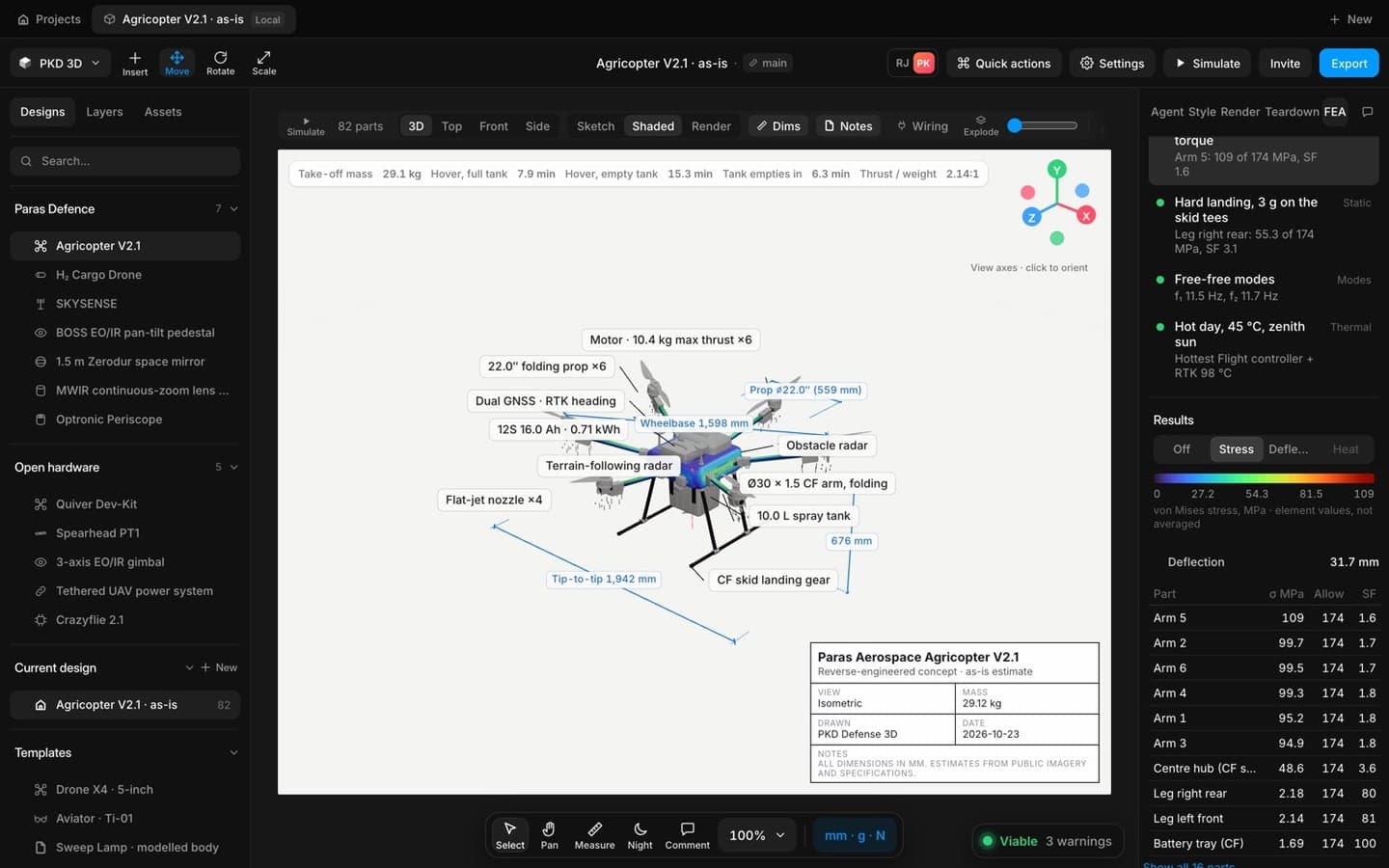
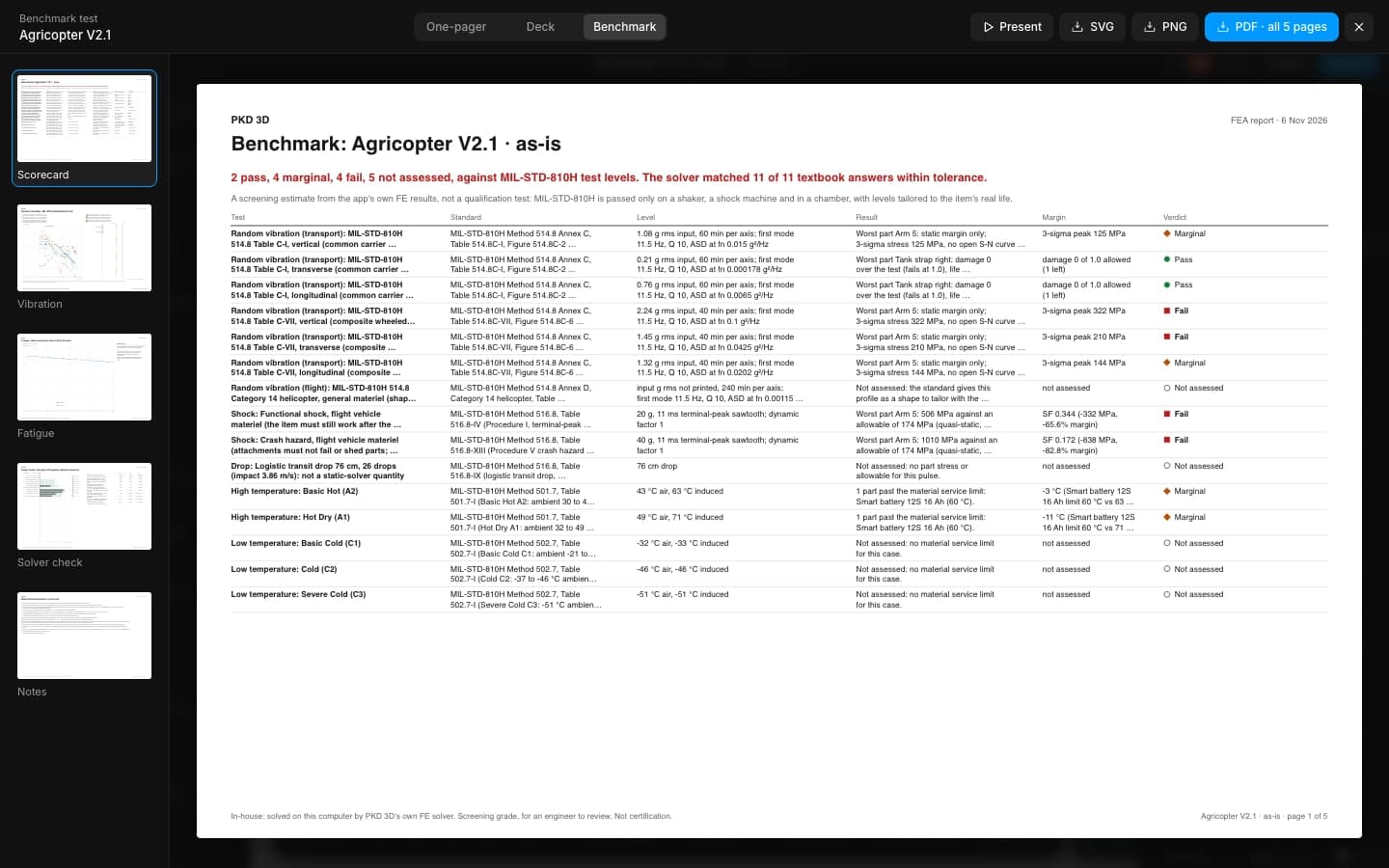
A scorecard ranks every part by margin across all cases, so the first thing to fix is the first thing you see.
- Pass, marginal, fail or not assessed
- The limiting part and case
- Into the deck with one click
Environments covered
High temperature
Basic hot and hot dry climatic categories, ambient and induced.
Low temperature
Basic cold, cold and severe cold categories.
Vibration
Common carrier transport and helicopter vibration profiles.
Shock
Functional shock, transit drop and crash hazard levels.
Fatigue and solver check
Vibration damage summed per part, and a page that checks the solver against textbook answers.
Clear limits
A benchmark is a design check, not a qualification test, and the report says so.
More of Speed
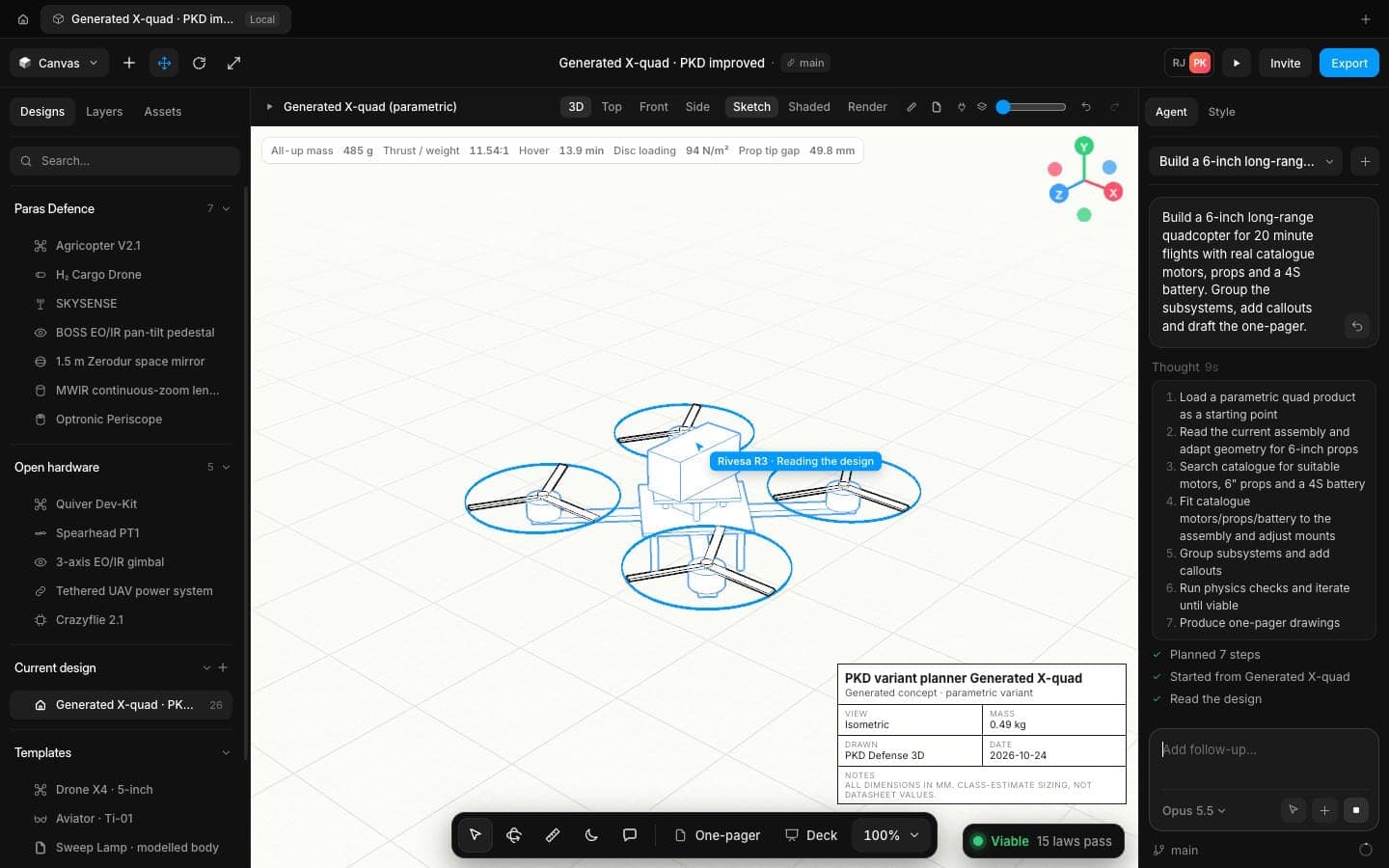
AI design agent
Describe the job in plain words.
Learn more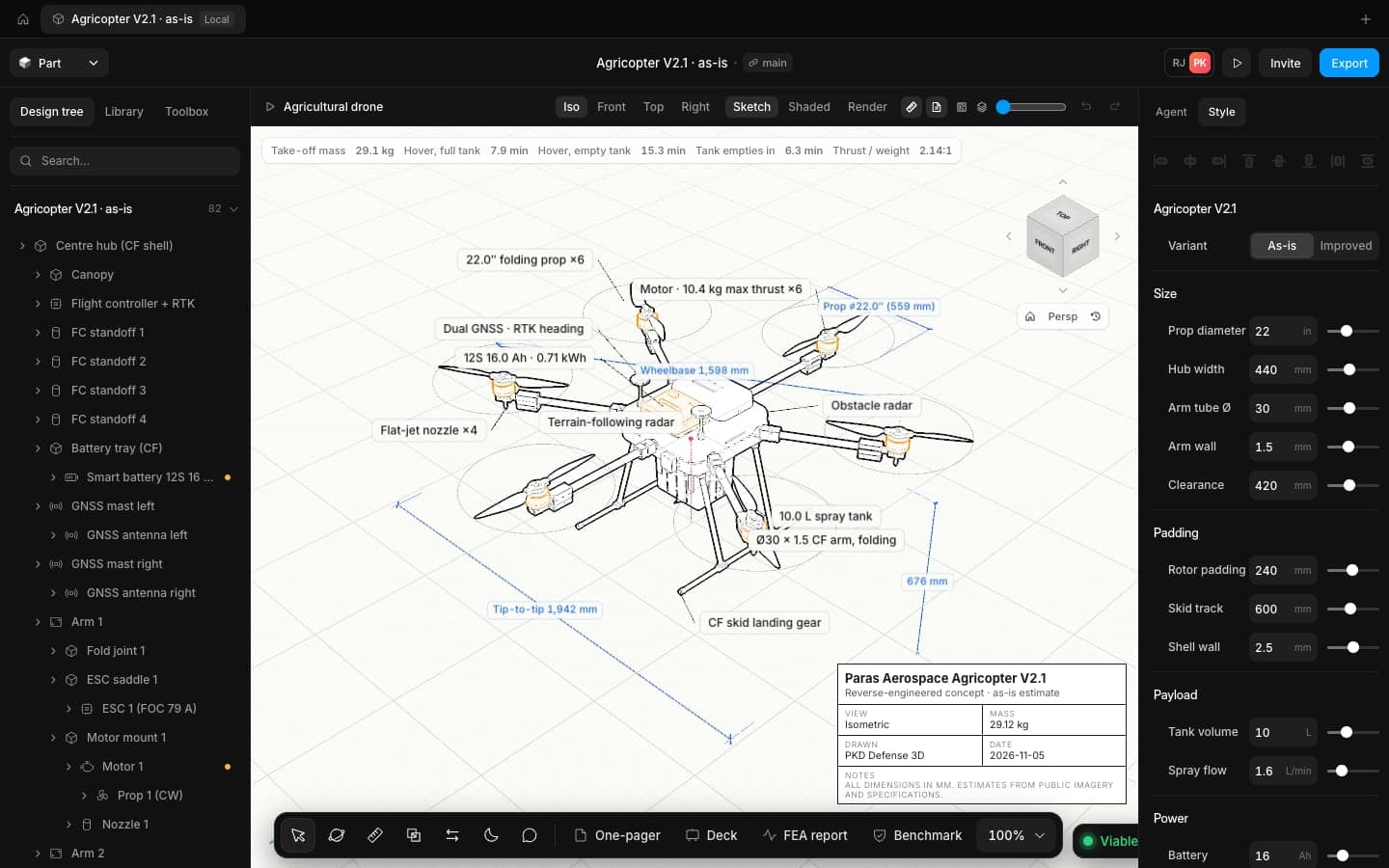
Physics checks
Mass, thrust to weight, hover time and disc loading update on every edit.
Learn moreFEA and reports
Run FEA on the real parts in your browser.
Learn more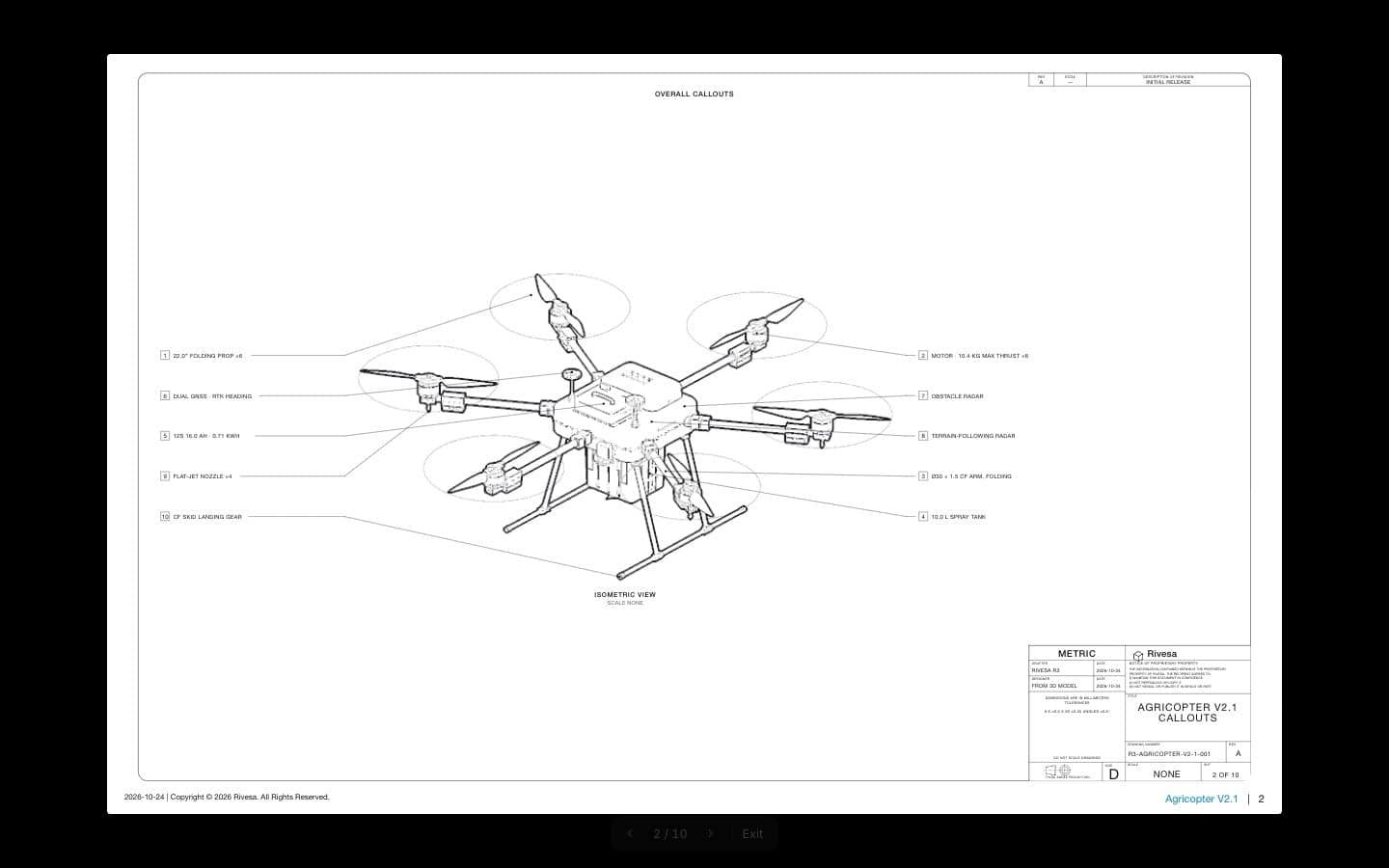
Drawings
Views, sections, callouts, title blocks and GD&T, made from the 3D model and kept in step with it.
Learn more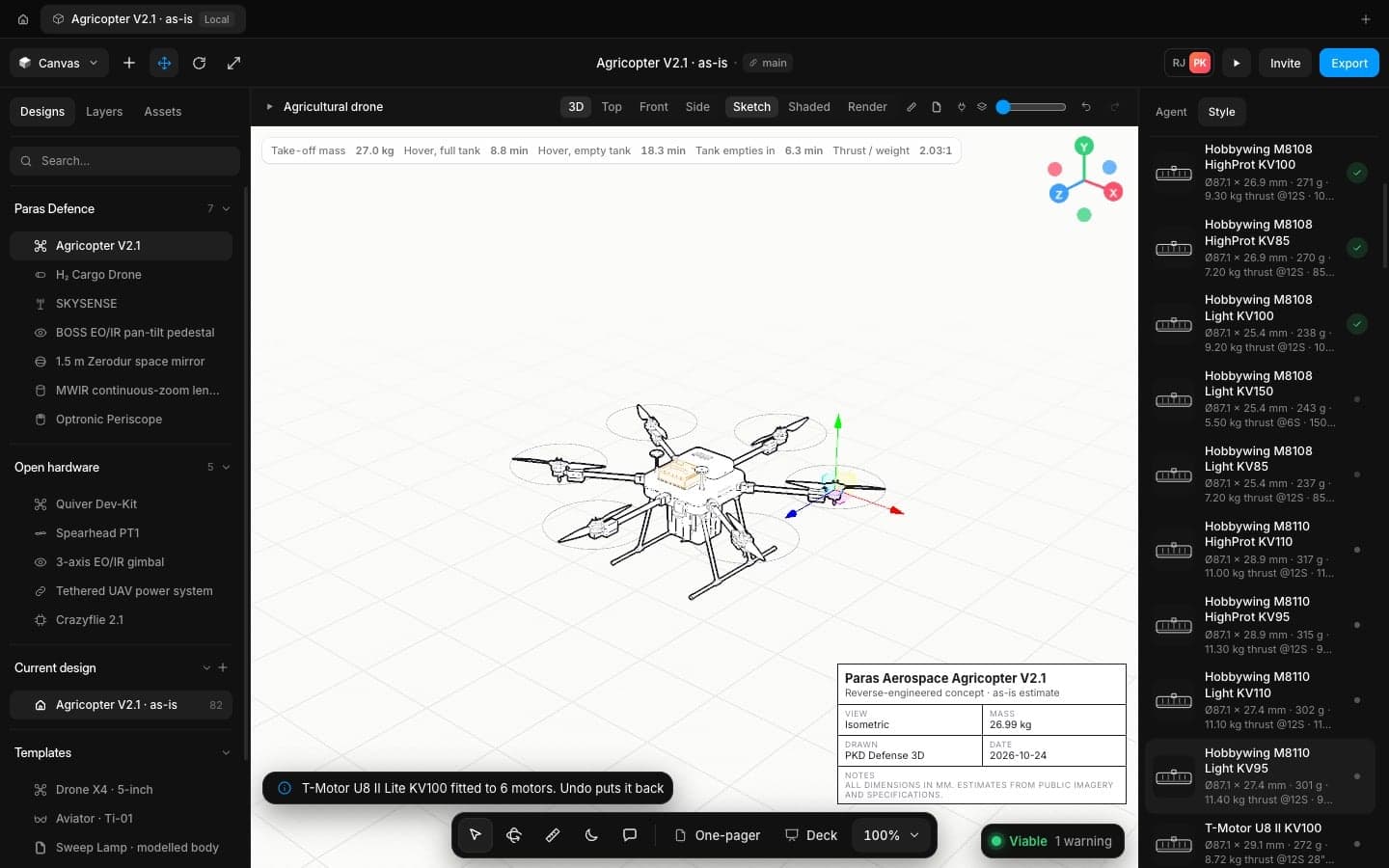
Compare
Pick a motor, a battery, a bearing or a fastener.
Learn moreFrequently
asked questions
No. Qualification needs physical testing. The benchmark tells you, before you build, which parts are most likely to fail those tests.
Some cases need data a screening solver does not have, such as a material's service limit at a given temperature. The scorecard says so instead of guessing.
Ship hardware at the speed your programme moves
Open the app in your browser and have a checked concept on screen in minutes. No install, no licence server.