Concepts your reviewers can actually check
Every number has a source and a grade. Benchmarks cite the MIL-STD-810H method they come from. Reports say plainly what was estimated.
What gets in the way
and what changes
The problems we hear most from defence primes, and how Speed takes them off the table.
Unverifiable concept numbers
Vendor slides rarely show their working. Every Speed result keeps its law, inputs and grade.
Environmental risk found late
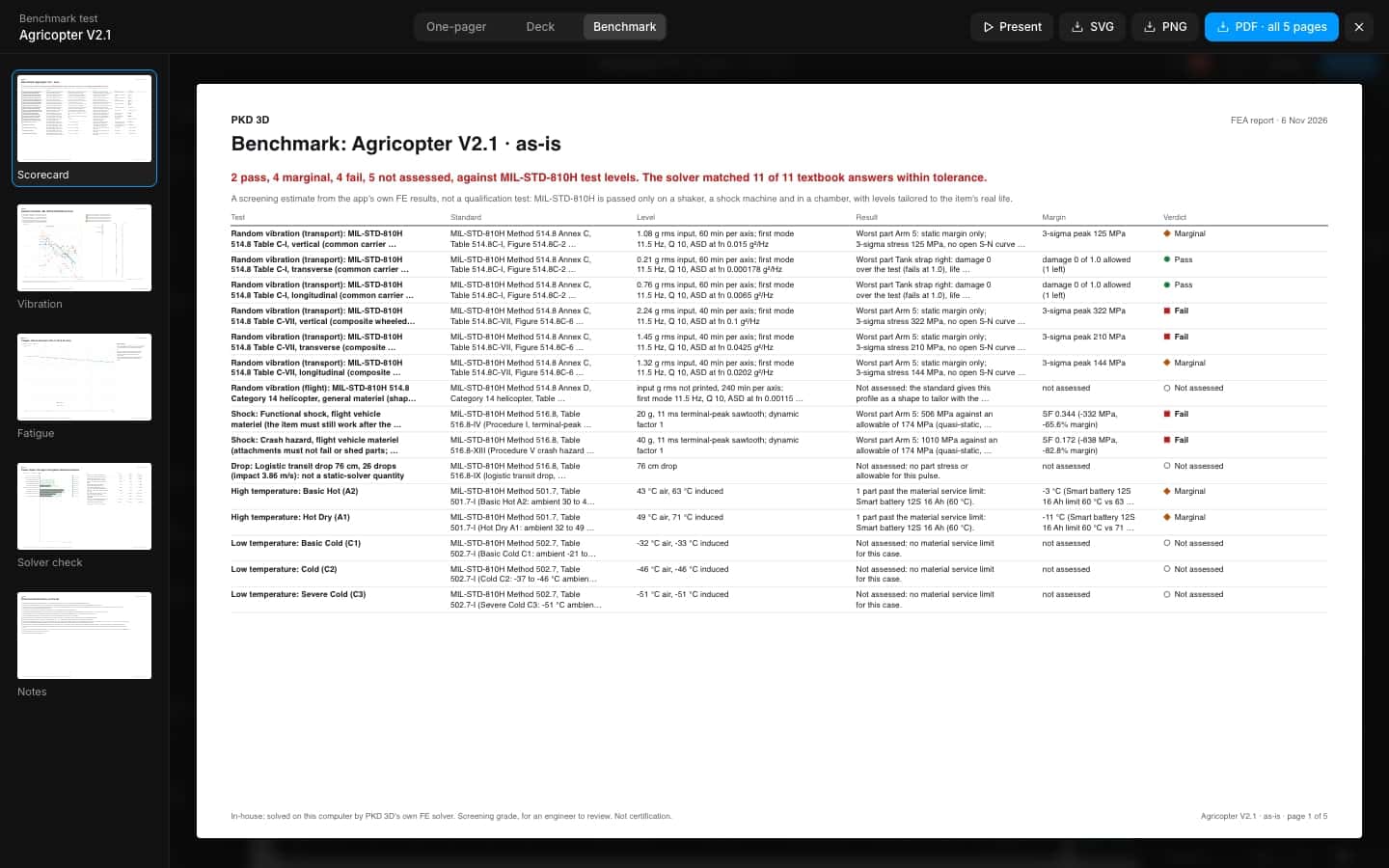
Benchmark runs heat, cold, vibration and shock levels before anything is built.
Data that can't leave the building
The kernel runs in the browser, and private deployment is available for controlled work.
How it works
Three steps, one model, no exports in between.
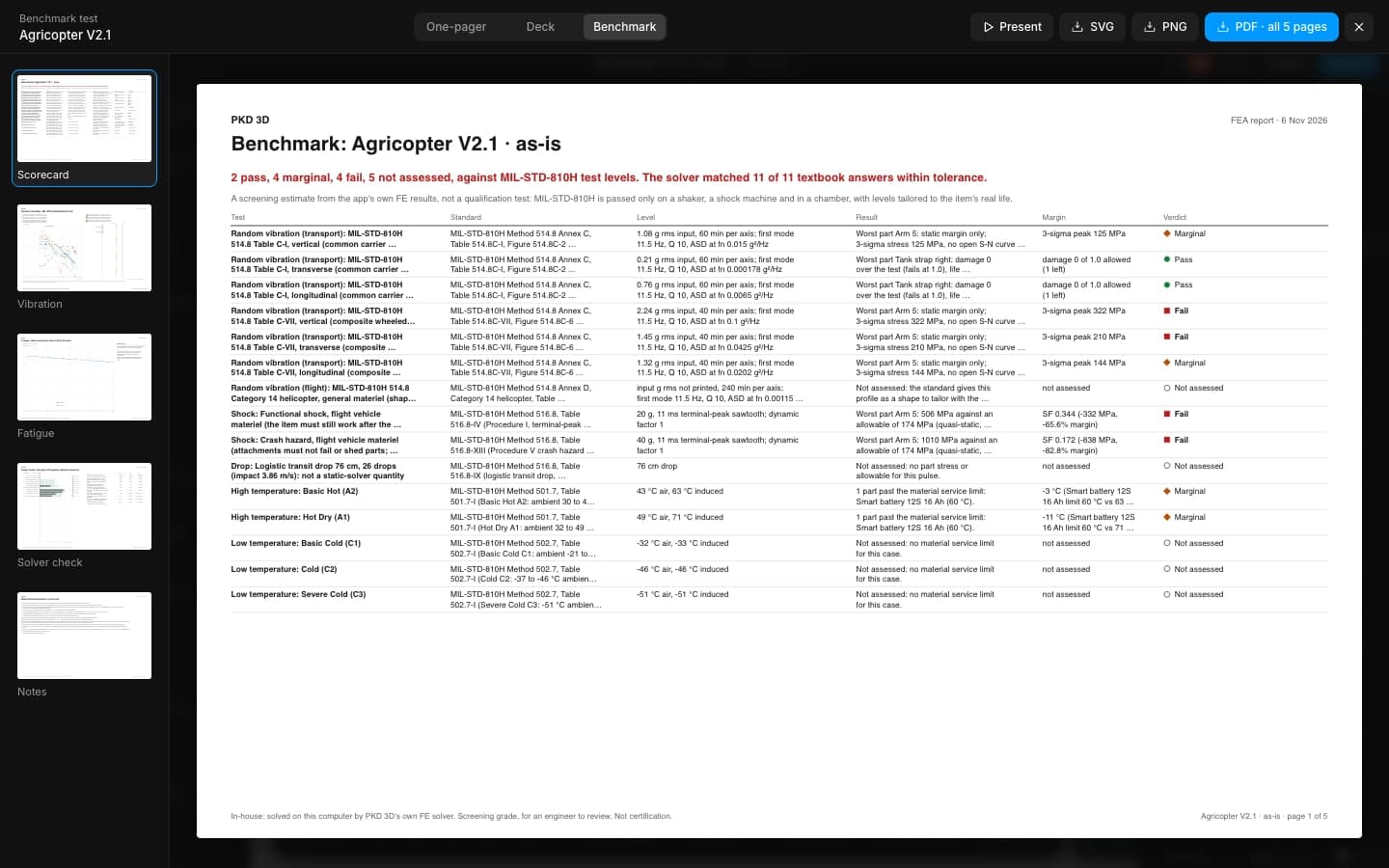
Benchmark early
Run the concept against the environments in the programme spec and rank parts by margin.
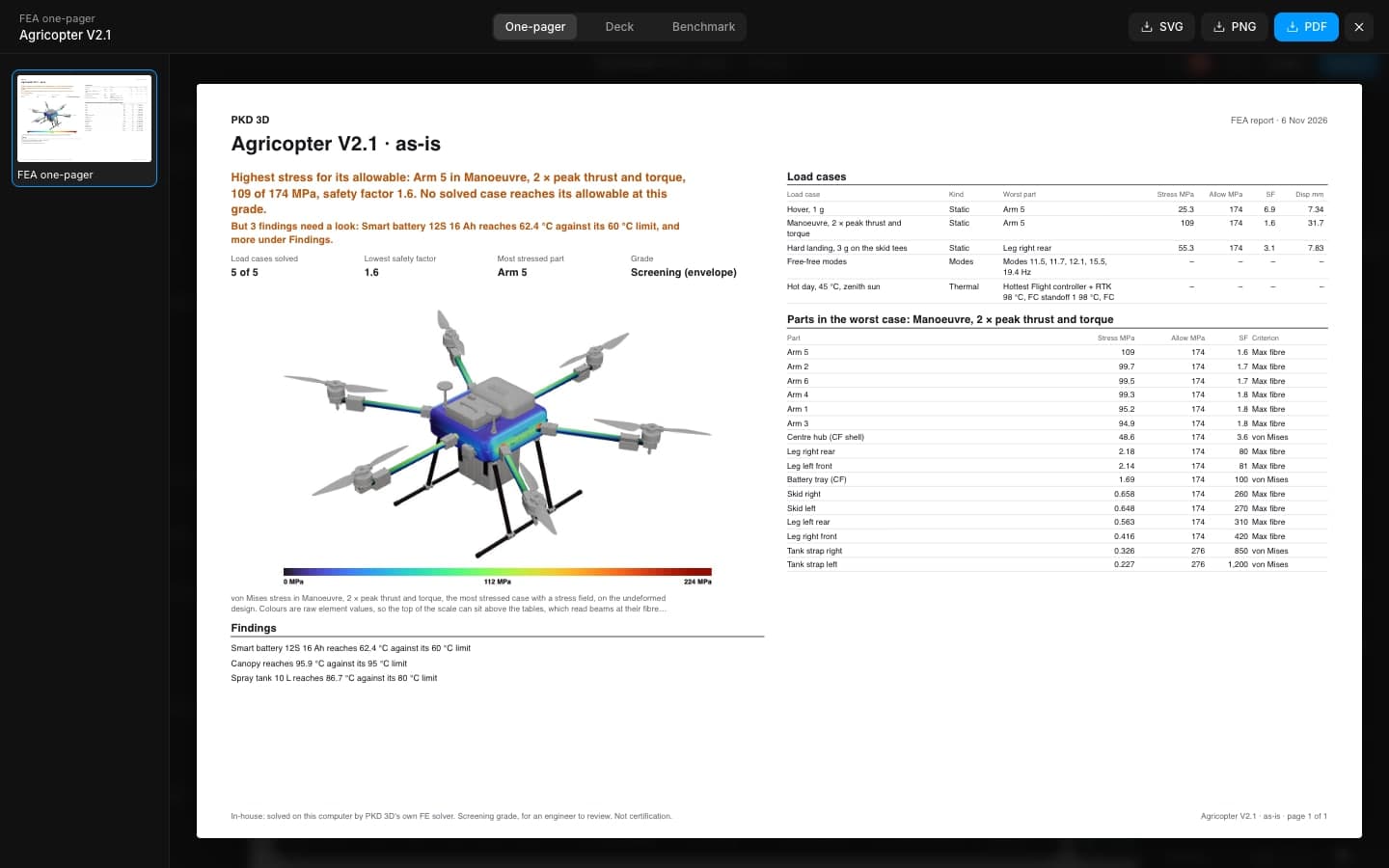
Report with the grade attached
One-pagers and decks label screening results as screening, every time.
Hand over open data
STEP and DXF out, so the concept carries into your detailed design tools.
The tools you'll use most
Benchmark
Benchmark runs your design through heat, cold, vibration and shock at MIL-STD-810H levels and shows which part runs out of margin first..
Learn more about BenchmarkDrawings
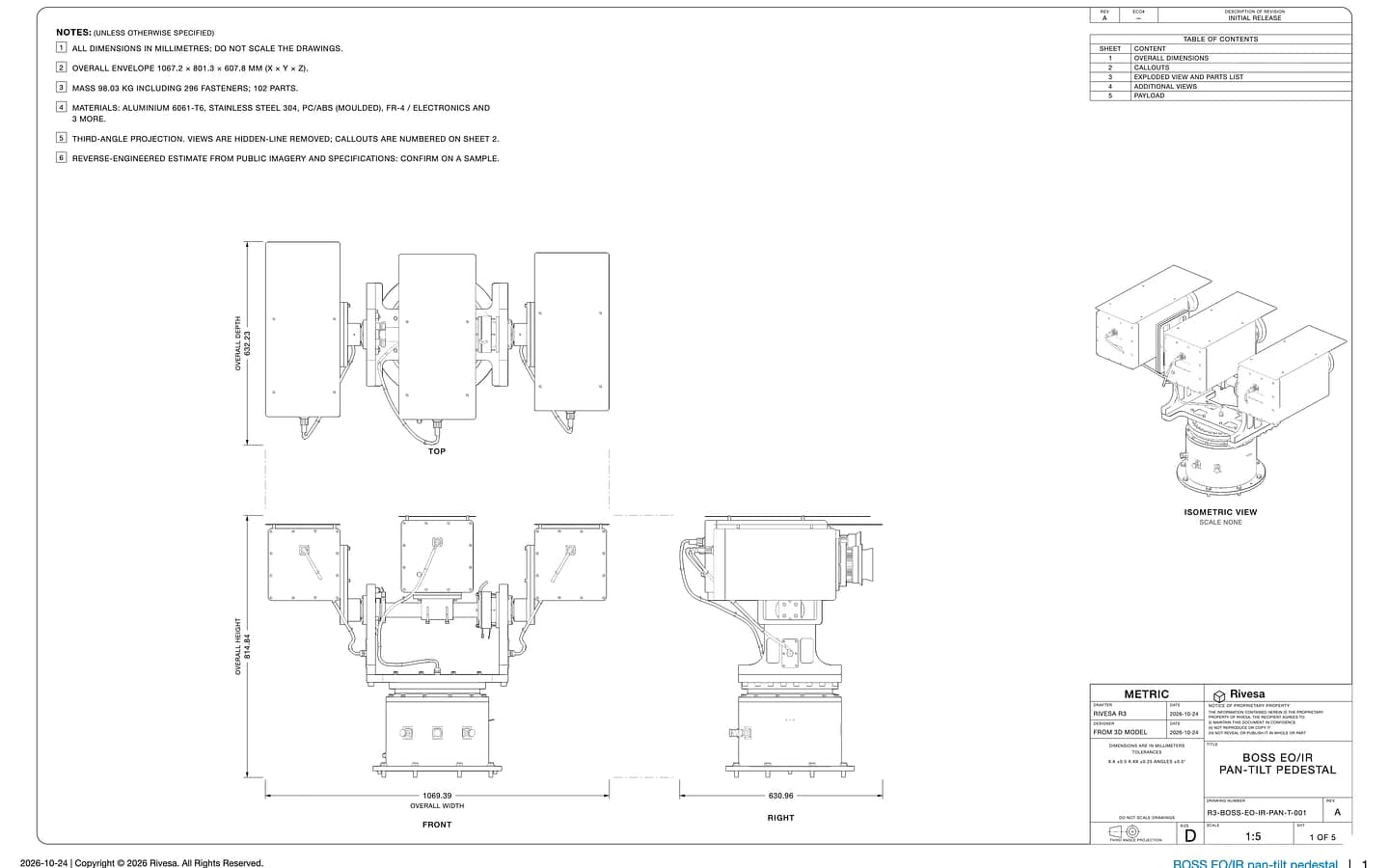
Views, sections, callouts, title blocks and GD&T, made from the 3D model and kept in step with it.
Learn more about DrawingsShip hardware at the speed your programme moves
Open the app in your browser and have a checked concept on screen in minutes. No install, no licence server.